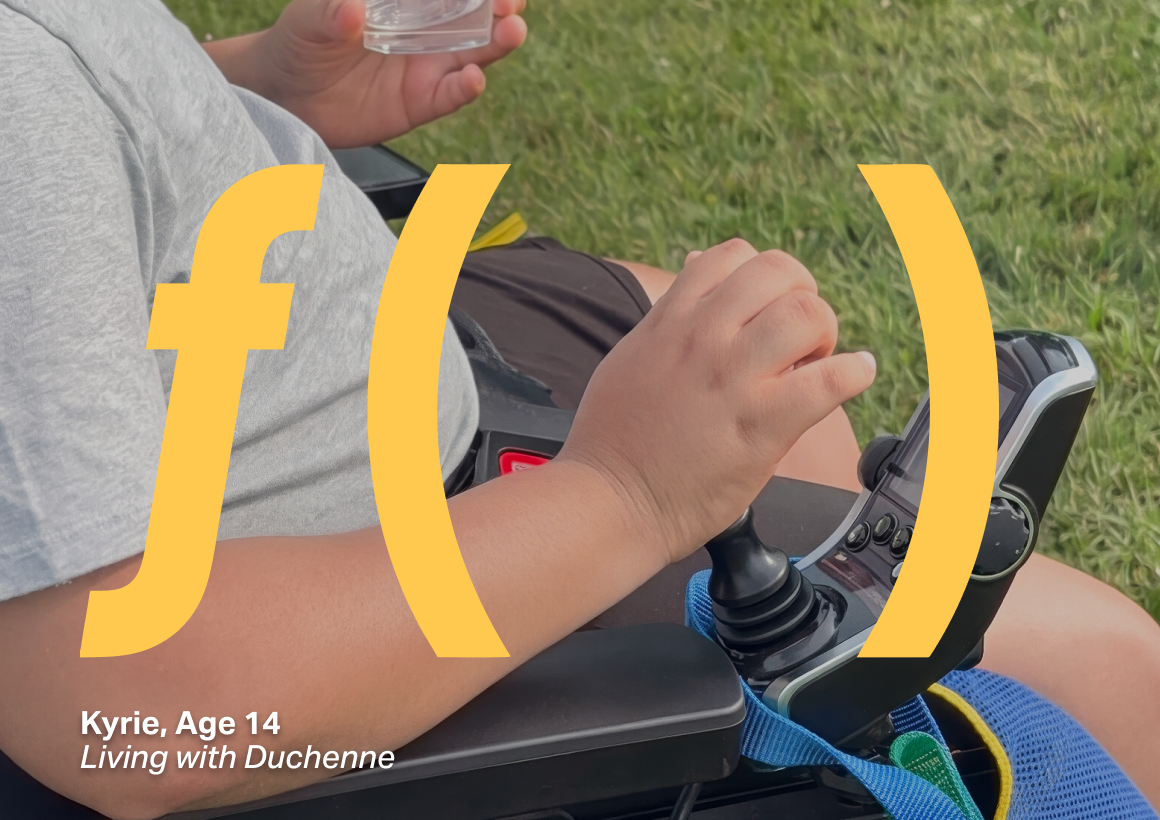
It's time to shift expectations toward meaningful improvements that people living with Duchenne may see and feel in everyday life6-8:
line dot animation
more independence, more stamina, more strength.
Meaningful functional improvement may mean different things to different people living with Duchenne. This could include improvements in daily abilities, holding onto the function they currently have, or change in the course of the disease.
When I think about what comes next in Duchenne and what I'm most excited about, I think about second-generation therapies, primarily those aimed at dystrophin restoration.
Erika Finanger, MD, MS
Pediatric Neurologist and Neuromuscular Specialist
Past progress achieved and continued scientific advancement in Duchenne
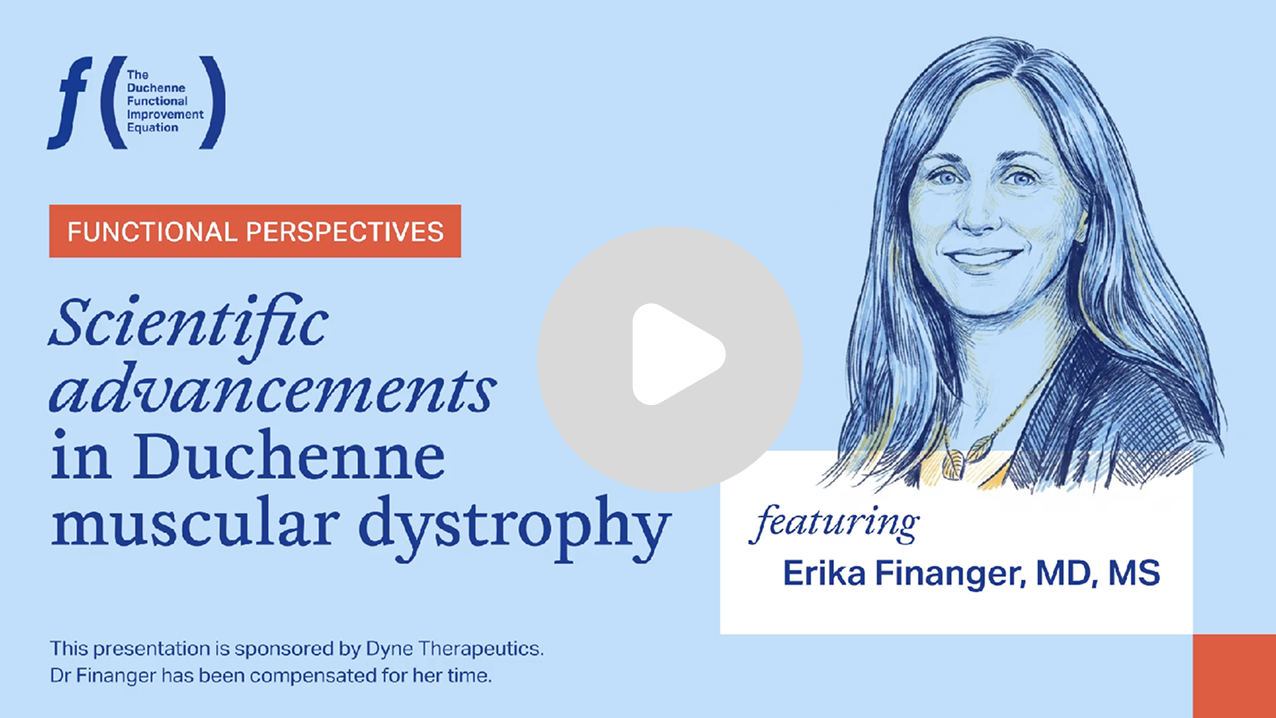
Addressing functional improvement in Duchenne
Ongoing research is attempting to overcome the challenge of addressing all 3 components of dystrophin in the functional improvement equation.4,9,10
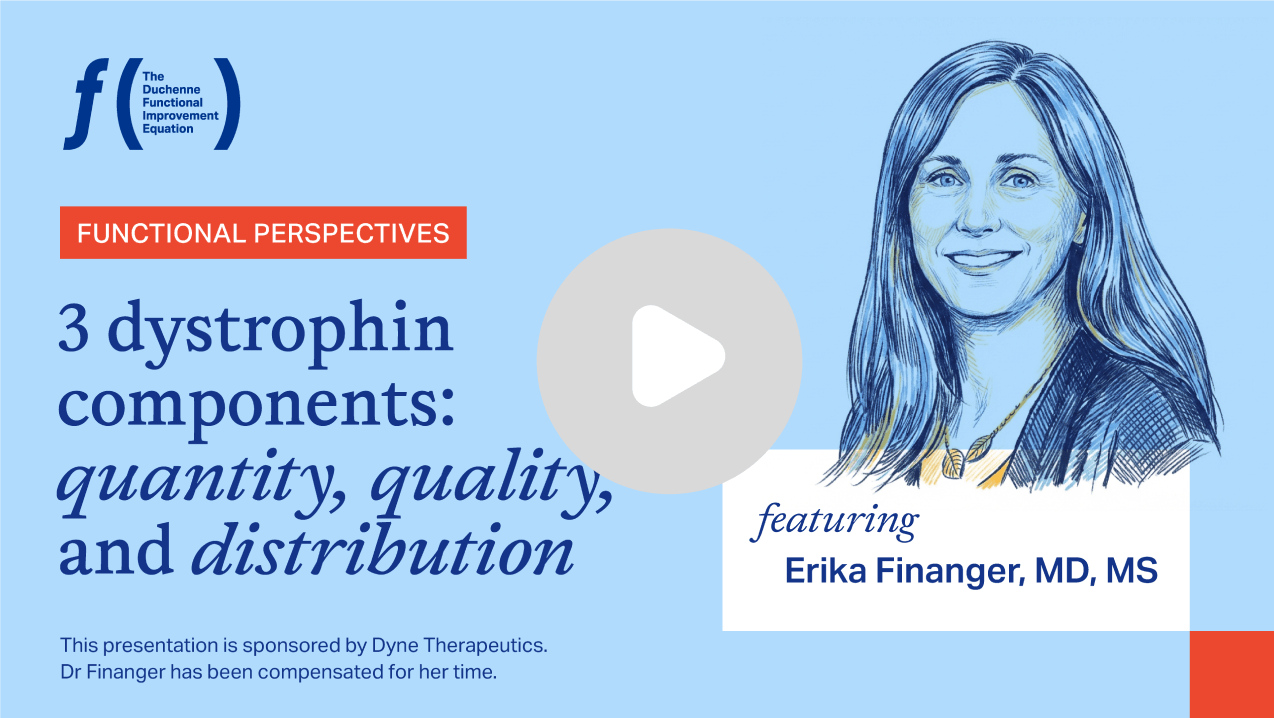
How achieving dystrophin quantity, quality, and distribution simultaneously could drive functional improvement in Duchenne
How it adds up for people living with Duchenne
Treatment goals must be anchored to functional outcomes that are important to individuals living with Duchenne, including:

Preserving daily function6-8,11-13
- Maintaining ambulation
- Inhibiting the loss of upper limb function
- Supporting independence with activities of daily living

Protecting vital organs7,14
- Preventing or delaying cardiomyopathy
- Conserving respiratory capacity
- Addressing issues related to gastrointestinal dysfunction
I want him to keep smiling and being independent and hugging those who he wants to hug.
Jess
Mom and caregiver of a 15-year-old son living with Duchenne
Researchers asked people living with Duchenne and their caregivers:
What treatment benefits would you consider to be meaningful?

AMBULATORY6
- Better mobility
- Improved strength and/or less muscle weakness
- Improved endurance and/or more energy

NON-AMBULATORY6
- Improved strength and/or less muscle weakness
- More independence in carrying out activities of daily living
- Improvements to mobility
Based on a 2023 qualitative study published in the Journal of Patient-Reported Outcomes examining patient and caregiver perspectives on the impact of Duchenne, including expectations for future treatments. The study was conducted in a manner that involved interviewing 46 caregiver-patient pairs. Participants included males aged ≥4 years with genetically confirmed Duchenne (ambulatory, n=28; non-ambulatory, n=18) and adult caregivers aged ≥18 years (n=42).
In a separate survey of non-ambulatory patients living with Duchenne and their caregivers,
of responses focused on the desire for functional improvement—including mobility, respiratory, cardiac, and digestive function7
Based on a 2018-2020 survey published in Therapeutic Innovation & Regulatory Science evaluating the unmet therapeutic needs of non-ambulatory patients with Duchenne (N=275). Patients (mean age of 24) or their caregivers from multiple countries answered open-ended questions related to significant symptoms and important benefits of new treatment. 223 out of 275 participants provided responses (n=571) to the question about small, but important benefits of a new treatment.
Starting the
conversation
If you or someone you care for is living with Duchenne, consider the following questions before you meet with your doctor next:
If dystrophin could work better throughout the body, what changes in daily life would you find most impactful?
What could functional improvement mean to you?
- Small improvements seen over time
- Delaying loss of ability to walk
- Maintaining function
- Preserving independence
Start the discussion with your doctor today
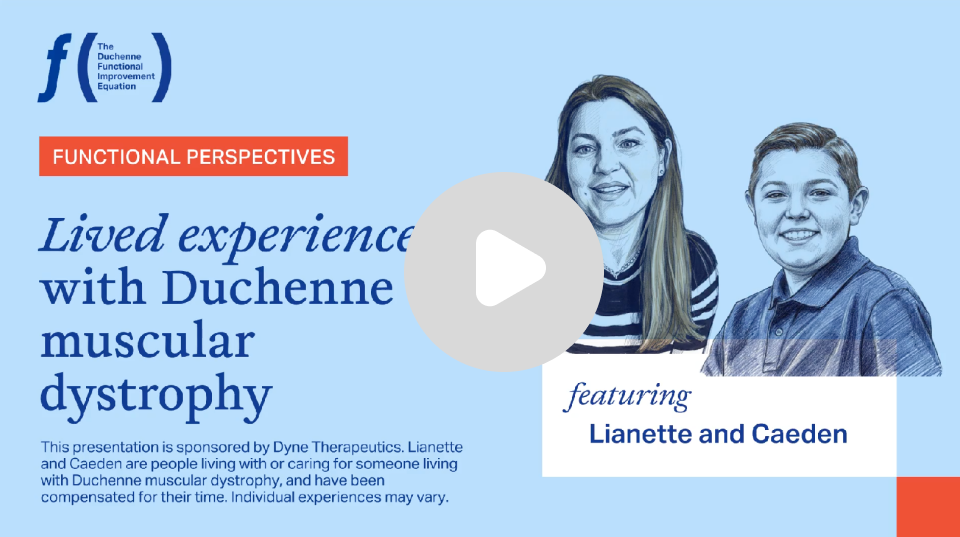
Learn how Caeden and Lianette lean on their doctors for help navigating treatment decisions

Brochure for doctors and other healthcare professionals
Get instant access to the most important information about the Duchenne Functional Improvement Equation.
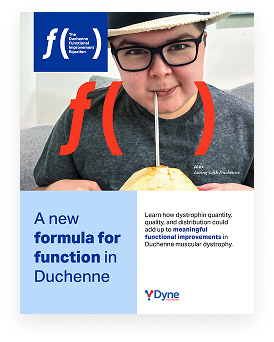
Brochure for people living with Duchenne and their caregivers
Quickly access the most important information from the website.
Finding support within the community
Explore organizations dedicated to advocacy, education, and support for people living with Duchenne and their families.
Dyne Therapeutics is providing these websites and resources to help individuals find more information about Duchenne, but their inclusion does not represent an endorsement or a recommendation from Dyne Therapeutics for any group or organization. Any organization listed is independent of Dyne Therapeutics.
Be counted in
what comes next
Sign up for emails and be the first to know about the latest news and research in Duchenne.
REFERENCES:
1. Bengtsson NE, Tasfaout H, Chamberlain JS. Mol Ther. 2025;33(5):2035-2051. 2. Bez Batti Angulski A, Hosny N, Cohen H, et al. Front Physiol. 2023;14:1183101. 3. Elangkovan N, Dickson G. J Neuromuscul Dis. 2021;8(s2):S303-S316. 4. Loboda A, Chamberlain JS, Dulak J. Mol Ther Nucleic Acids. 2025;36(4):102759. 5. Takeda S, Clemens PR, Hoffman EP. J Neuromuscul Dis. 2021;8(s2):S343-S358. 6. Brown V, Merikle E, Johnston K, Gooch K, Audhya I, Lowes L. J Patient Rep Outcomes. 2023;7(1):129. 7. Schuster ALR, Crossnohere NL, Fischer R, Furlong P, Bridges JFP. Ther Innov Regul Sci. 2022;56(4):572-586. 8. Schwartz CE, Jackson S, Valentine J, et al. Orphanet J Rare Dis. 2023;18(1):90. 9. Arechavala-Gomeza V, López-Martínez A, Aartsma-Rus A. J Neuromuscul Dis. 2026;13(2):156-166. 10. Chassin A, Ono H, Ashida Y, Imamura M, Aoki Y. Int J Mol Sci. 2026;27(6):2755. 11. Audhya I, Nacson AB, Gooch K, et al. Neurol Ther. 2026;15(1):41-60. 12. Iff J, Carmichael C, McKee S, et al. Adv Ther. 2024;41(8):3278-3298. 13. Staunton H, Trennery C, Arbuckle R, et al. Health Qual Life Outcomes. 2021;19(1):184. 14. Duan D, Goemans N, Takeda S, Mercuri E, Aartsma-Rus A. Nat Rev Dis Primers. 2021;7(1):13.